
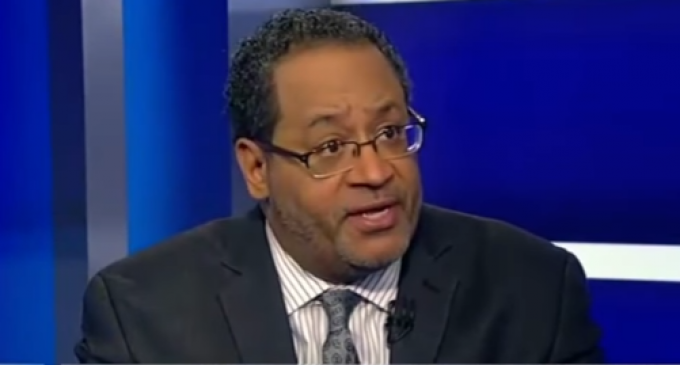
In a movement reminiscent of the affirmative action debates in the 1970’s, there exists today demands that white Americans pay reparations to African-Americans for centuries of black slavery as well as oppression that persisted even after slavery was abolished in American 150 years ago.
One difference between the two is that while affirmative action required that business and educational institutions take specific actions to to expand the pool of minorities applying for jobs and offer them preferential treatment in the hiring process, the reparations movement would demand that white Americans set aside a portion of their money to be used as direct payment to minorities as compensation for alleged damages they have suffered because of their race.
One African-American professor has gone so far as to place a value of $40 trillion on the sum allegedly due blacks as a result of the oppression he claims they have suffered. In another case, a Congressman has introduced legislation to mandate reparations for slavery.
It’s a radical idea as explored on page two.

Since that’s the case…I would like to see reparations for all the “white” lives lost battling for their freedom.SMFH
Not going to happen you political slacker. I didn’t own a slave and am not paying you to be black.
Very few whites had slaves most whites said it was wrong and blacks also owned slaves.
F**k youuuu!!
Hpw can he be a professor and not know American History??? REPARATIONS WERE PAID AT EMANCIPATION!!!
Hugo Guzman , This sounds good !…….9 FACTS ABOUT SLAVERY Democrats Don’t Want You To Know
By 100% FED Up –
May 5, 2016
1. The First Legal Slave Owner in American history was a Black tobacco farmer named ANTHONY Johnson.
2. North Carolina’s largest slave holder in 1860 was a Black Plantation owner named William Ellison .
3. American Indians owned thousands of slaves .
4. In 1830 there were 3,3775 free Black people who owned 12,740 black slaves.
5. Many Black slaves were allowed to hold jobs , own business’s & own real estate .
6. Brutal Black- on- Black slavery was common in Africa for thousands of years.
7. Most slaves brought to America from Africa were purchased from Black slave owners.
8. Slavery was common for thousands of years .
9. White people ended legal chattel slavery .
Hahahaha! Grow up.
Hugo Guzman ,
White Slavery
History Denied , Covered up & Marginalized
In the 17th Century , from 1600 until 1699 , there were many more Irish sold as slaves
than Africans. There are records of Irish slaves well into the 18th Century . Many never
made it off the ships. According to written record , in at least one incident 132 slaves , men,women
and children , were dumped overboard to drown because ships’ supplies were running low .
They were drowned because the Insurance would pay for an ” accident ” , but not if the slaves
were allowed to starve.
The first slaves imported into the American colonies were 100 white children in 1619 , four months before the arrival of a
first shipment of Black slaves. Many were brought from Ireland , where the law held that it was ” no more sin to kill an
Irishman than a dog or any other brute “. King James ll , followed by Charles l and Oliver Cromwell , sold over 500,000 Irish Catholics into slavery throughout the 1600’s onto plantations in the West Indies Islands of Antigua , Montserrat ,
Jamaica , Barbados , as well as Virginia and New England. Irish slaves were less expensive than African , and treated with more cruelty & death.
Good luck with that.
Hugo Guzman ,
Abraham Lincoln, which is a major red flag for anyone who understands natural law as it relates to America’s founding principles. The Lincoln Administration was… a centralized oppression that created the hideous 14th Amendment along with other state vices during Reconstruction; had the South seceded peacefully in 1861, slavery would have ended regardless via abolition, as it did in 11 other nations—and nearly 620,000 lives would not have been lost!
Abraham Lincoln was a deplorable tyrant, a big-government shill, and an un-American traitor who suspended Habeas Corpus and violated the Constitution by making ‘arbitrary’ arrests on American citizens for opposing the regime. His only aim during the Civil War was to save the Union—not end slavery—which he explicitly expressed in a letter to Horace Greeley:
EXECUTIVE MANSTON,
WASHINGTON, Aug. 22, 1862.
Hon. Horace Greeley:
DEAR SIR: I have just read yours of the 19th, addressed to myself through the New-York Tribune. If there be in it any statements or assumptions of fact which I may know to be erroneous, I do not now and here controvert them. If there be in it any inferences which I may believe to be falsely drawn, I do not now and here argue against them. If there be perceptible in it an impatient and dictatorial tone, I waive it in deference to an old friend, whose heart I have always supposed to be right.
As to the policy I “seem to be pursuing,” as you say, I have not meant to leave any one in doubt.
I would save the Union. I would save it the shortest way under the Constitution. The sooner the national authority can be restored the nearer the Union will be “the Union as it was.” If there be those who would not save the Union unless they could at the same time save Slavery, I do not agree with them. If there be those who would not save the Union unless they could at the same time destroy Slavery, I do not agree with them. My paramount object in this struggle is to save the Union, and is not either to save or destroy Slavery. If I could save the Union without freeing any slave, I would do it, and if I could save it by freeing all the slaves, I would do it, and if I could save it by freeing some and leaving others alone, I would also do that. What I do about Slavery and the colored race, I do because I believe it helps to save this Union, and what I forbear, I forbear because I do not believe it would help to save the Union. I shall do less whenever I shall believe what I am doing hurts the cause, and I shall do more whenever I shall believe doing more will help the cause. I shall try to correct errors when shown to be errors; and I shall adopt new views so fast as they shall appear to be true views.
I have here stated my purpose according to my view of official duty, and I intend no modification of my oft-expressed personal wish that all men, everywhere, could be free. Yours,
A. LINCOLN.