
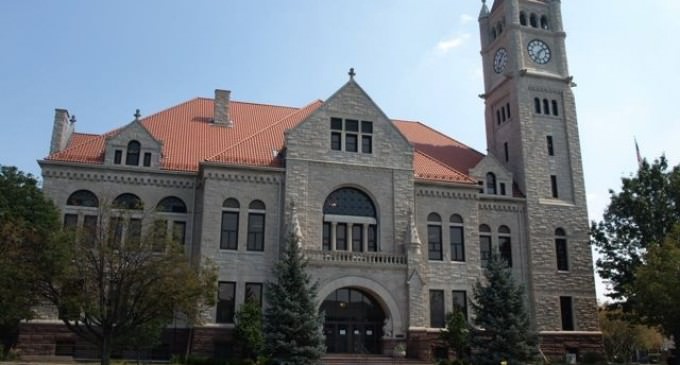
In a recent pre-trial hearing in Xenia, Ohio, a judge agreed with a prosecutor’s motion to prohibit the defendant from mentioning the Constitution or the constitutionality of the law he was charged with violating.
Judge Catherine Barber stated “there will be no mentioning of the Constitution” to the defendant, Virgil Vaduva.
The prosecutor made the claim that mentioning the Constitution “will confuse the jury,” to which Vaduva replied that uttering words on a public sidewalk, his panhandling charge, constitutes free speech.
MOVE TO PAGE 2:

Can’t legally do that, it’s the law of the land, the judge needs to be fired
She must have slept through law school and pencil whipped her bar exam . This is down right unbelievable .
Then she should be thrown off the bench and her license to practice law should be revoked
This entire administration, and “The Cons$#%&!@*ution” no longer co-exist. It is so plainly evident.
She’s right actually. Commercial speech is NOT protected by the cons$#%&!@*ution, and pan-handling is commercial speech. It seems from all the comments on this thread that the judge was 100% correct, and a jury would be confused and mistake it as a freedom of speech issue.
Cons$#%&!@*utionality claims are only relevant in the appeal of a conviction, right?
Trial courts proceed under the $#%&!@*umption that laws are valid…what their purpose is, is to determine the “facts” of the case. Who did what to whom, and when? Etc. Each side can produce evidence and witnesses etc to try to establish their story of the facts.
Appeals courts will $#%&!@*ume whatever story of the facts that were established in trial court, are correct. No new evidence can be submitted. What their job is, is to determine if the points of law were applied correctly…most commonly procedural laws (should that evidence have been admissible?), but also cons$#%&!@*utional (does that law violate some other legal precedent that takes precedence, such as the cons$#%&!@*ution?).
Now technically, the courts were never given the power of judicial review…they just kind of started doing it. So I don’t think there’s any formal writing that says specifically that that’s how it’s done…but, that’s how it’s done lol.
So…………..yes?
I think technically any court can do it actually…but it doesn’t really matter if they do or not. It will go to an appeals court either way, and their decision is the one that matters.
I wanted to be sure I’m saying the right things, so I looked it up. Yes, any court can strike down a law for being “inconsistent with the cons$#%&!@*ution”.